One Film, Two Rooms: Choosing Where to Watch
Choosing where to watch a film starts with the attention you want. Match solo viewing or a shared room to your mood, the film, and your company.
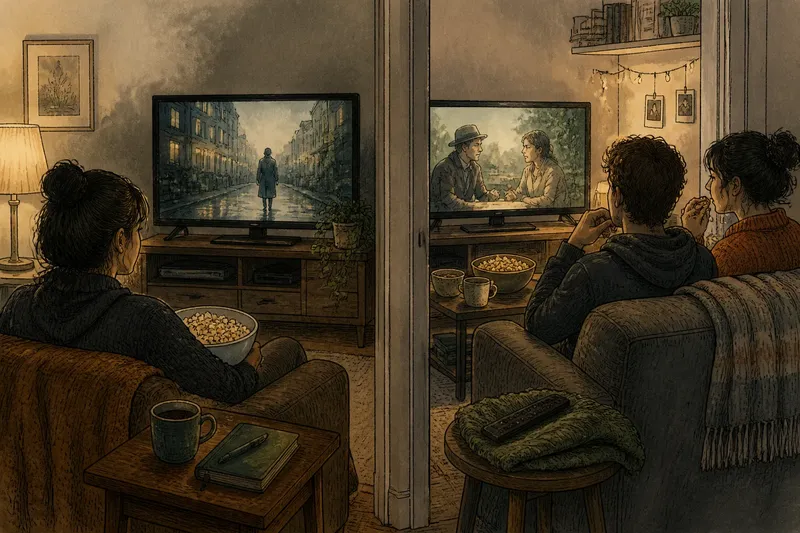
You have queued a film while a friend settles onto the sofa and asks whether you want to talk as you watch. Choosing where to watch a film is also choosing whose reactions will shape your attention: your own, someone else’s, or both.
Choose the kind of attention
A solo screening gives you room to form an uninterrupted first impression. You can stay with a long pause, follow a fleeting visual clue, or stop to think without checking whether another viewer is ready to continue.
Shared viewing makes another person part of the experience. Their laughter, silence, or surprise may draw your attention to a scene differently, even if neither of you says anything during the film.
Neither arrangement is automatically better for a particular genre. Ask what you want from this watch: to concentrate, to share a reaction, to relax together, or to make time for a conversation afterward.
Match the viewing style
If a film is new to you and its story is intricate, consider whether you want to follow it without commentary or compare reactions as it unfolds. If you already know the film, a shared rewatch can make familiar scenes newly noticeable through another viewer’s response.
Think about the people, not just the film. One friend may enjoy pausing to discuss a character’s choices; another may prefer to save every comment for the credits. A simple agreement beforehand can protect both preferences.
For example, say you have chosen an unfamiliar mystery and your friend likes to discuss each clue. You decide together to watch the first half without pauses, then check in during a planned break; the likely result is enough uninterrupted time to follow the setup, with a clear opening for conversation before the story moves on.
Set expectations together
Before pressing play, ask whether the group wants quiet attention or an informal discussion. Agree on what to do if someone needs a pause, and whether questions can wait for a scene break or the credits.
These small choices are like deciding how to share a kitchen table: everyone can have room without making the arrangement formal. Keep the conversation available, but do not make reacting aloud part of the assignment.
- Notice the film is new to you: If you want to build your own first impression, watch alone or ask for quiet; otherwise, invite someone whose reactions you enjoy.
- Notice you want to discuss scenes: If everyone welcomes pauses, agree on a signal and stop at scene breaks; otherwise, save comments for the credits.
- Notice one viewer is tired: If they may drift in and out, choose a familiar film or let them join another time; otherwise, pick a story everyone is ready to follow.
- Notice the group has different preferences: If a compromise sounds comfortable, set a no-comment stretch and a break; otherwise, plan separate viewings and talk afterward.
- Notice a viewer needs subtitles or another access option: If the setting is available and helpful, turn it on before starting; otherwise, check the film’s other audio or caption options together.
- Notice you mainly want company: If conversation matters more than continuous attention, choose a familiar film and make room for casual talk; otherwise, choose a quieter solo watch.
Which setup fits tonight?
Should I watch a new film alone?
Choose a solo viewing if you want to follow the story at your own pace or form a first impression without commentary. If another person’s reactions would add to the experience, invite them and agree on how much you want to talk.
How can we agree on talking during a film?
Ask whether comments should wait for a pause or the credits, and make room for someone to request a break. If preferences differ, choose a quiet stretch followed by a planned conversation rather than expecting everyone to adapt silently.
Is a rewatch better with company?
A familiar film can be enjoyable alone when you want to notice details at your own pace. Watch with someone if you are curious about their response or want the film to prompt a conversation.
What if our viewing preferences do not match?
Choose a shared approach only if each person can accept it, such as saving discussion for scene breaks. If that feels frustrating, watch separately and meet afterward to compare impressions.
Keep the choice flexible
You do not have to make one viewing style your routine. A solo watch can come before a group discussion, or a shared screening can send you back to a scene on your own.
When the credits begin, give yourself and anyone watching with you a moment to decide what comes next. You might talk, sit with the ending, or simply let the film be over; that choice keeps the evening responsive to the attention you actually wanted.