What a Ticket Stub Can Remember
A cinema ticket stub begins as proof of entry and can become a keepsake; learn what its changing role reveals about how moviegoing is remembered.
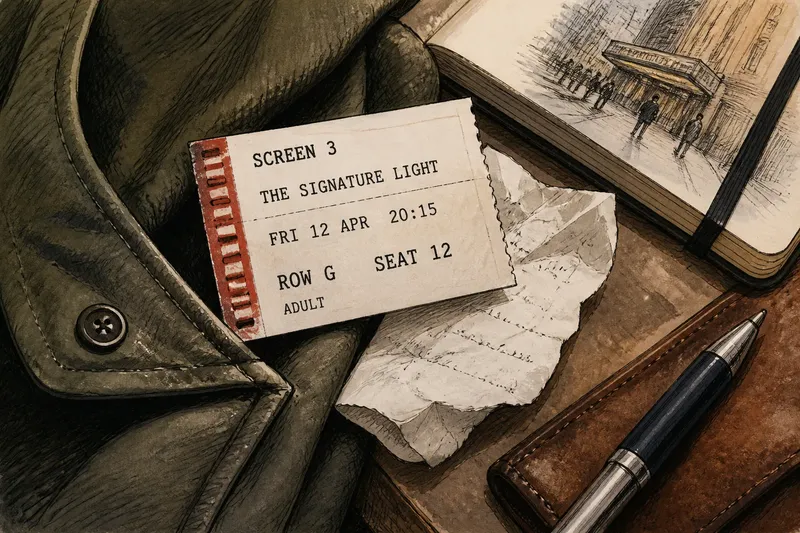
A ticket stub slips from a coat pocket beside a crumpled receipt, its printed time already past. A cinema ticket stub has completed its practical job, but its life as an object may just be beginning: it can prompt a memory, mark an occasion, or simply take up space in a drawer.
That change is easy to miss because the ticket looks so slight. Its value lies in two different things: what it did at the cinema and what someone later asks it to recall. Those roles can overlap, but they are not the same.
From entry token to record
At the cinema, a ticket is part of an admission system. It identifies a booking or seat, gives staff something to scan or tear, and helps a theater manage entry. Depending on the venue and format, it may be printed at a counter, produced at home, or displayed on a phone.
A paper ticket can therefore carry practical information: a film title, screening time, auditorium, seat, or booking reference. Some details are printed clearly; others may be abbreviated or absent. The ticket does not necessarily tell the whole story of the visit, and it was not made to serve as a diary.
Once the screening is over, the ticket’s immediate function usually ends. A digital ticket may disappear into an app or email, while a paper one can remain in a pocket or bag. Neither format automatically becomes a keepsake. That shift depends on whether a person chooses to connect the object with an experience.
Why paper can linger
Paper has a useful physical quality: it can be held, turned over, tucked into a book, and noticed later. That makes a ticket easy to associate with a particular night even if the printed details are sparse. A digital confirmation can preserve information too, but it often sits among messages that have no special meaning.
Think of a stub as a bookmark. It does not contain the book’s story, but it can return you to a page you might otherwise pass over. In the same way, the ticket may bring back the walk to the theater, the friend who came along, or the mood you carried into the room.
The object’s small size also shapes its afterlife. It can be slipped into a wallet or a notebook without much ceremony, and it may turn up by accident. A cinema ticket found months later can make a brief outing feel distinct from the rest of an ordinary week.
What the stub can and cannot say
A ticket is a narrow record. It may establish that someone had admission to a particular screening, but it cannot establish who watched the film, what they thought, or whether they stayed until the end. Even the printed title can have limits: a special program, shortened title, or venue code may not explain the event to someone looking at it later.
Memory supplies what the printing leaves out, and memory can change. One person may connect a ticket with a first date; another may remember the uncomfortable seat or the conversation afterward. The same stub can hold different associations for people who attended together.
That does not make the object unreliable or the memory false. It means the ticket works as a prompt rather than a complete account. Its printed facts and a person’s recollection are separate layers, each useful in a different way.
When a stub becomes personal
A ticket can gain meaning through the circumstances around it. A routine screening may matter because it was the first solo outing after a move, a family tradition, or a rare evening with someone who lived far away. The film itself may be central, or it may be only one part of what made the trip memorable.
Say you find a ticket in a jacket after a quiet week. It lists an animated film and an evening screening, but you cannot remember the plot. You recall that your niece chose the seats and argued cheerfully about the ending on the way home; the ticket now points toward that shared conversation, not just the film.
Someone else might keep the same kind of stub because they enjoy the design or want a small record of films seen in theaters. Neither reason is more legitimate. A keepsake is personal because of the use its owner gives it, not because the ticket carries an agreed level of importance.
Paper and digital tickets
Paper and digital formats preserve different traces. A printed ticket can show wear, folds, fading, or marks from handling, which may become part of its appeal. A digital ticket may retain a confirmation email, a booking detail, or an image, but it can be harder to distinguish from routine account records.
Paper is not automatically more meaningful, and a phone record is not automatically disposable. If a digital confirmation matters, a person can keep the email, save a permitted screenshot, or write down the occasion in a note. If a paper stub matters, storing it with a date or a few words can make its context easier to recover.
Preserving every ticket is not necessary. A small selection can be more useful than a pile whose contents become difficult to identify. The question is not whether a ticket deserves saving in the abstract, but whether keeping it serves a memory the owner wants to revisit.
Keeping the memory legible
Paper can fade, tear, or become hard to read, especially if it is handled often or left in sunlight. For a stub with personal value, place it in a notebook, envelope, or sleeve away from direct light and damp. Avoid writing over the printed information; add a brief note beside it instead.
Useful notes can be plain: who came, what the occasion was, or why the screening mattered. A date and a companion’s name may be enough to restore context. There is no need to turn an ordinary ticket into a detailed record unless that is enjoyable.
If a ticket is part of a larger collection, keep the arrangement understandable. Grouping by companion, venue, or personal occasion can make a small archive easier to browse than sorting only by film title. Choose a method that reflects what you want to remember, rather than trying to preserve a complete history of every outing.
Questions about ticket stubs?
Should I keep every cinema ticket?
No. Keep the ones that carry a memory, document a particular occasion, or simply please you to have. Let routine stubs go if storing them feels like a chore.
Can a digital ticket be a keepsake?
Yes. A saved confirmation or permitted image can prompt the same recollection as paper, especially if you add a short note about the outing. Its value comes from the association, not the material.
What if I cannot remember the screening?
Keep the ticket only if its design or another detail still matters to you. You can also note what you do remember, such as who might have joined you, without filling gaps with guesses.
How should I store a fragile stub?
Place it in a dry, shaded spot inside a notebook, envelope, or suitable sleeve, and limit unnecessary handling. If the printed material is valuable beyond personal sentiment, ask a qualified conservation professional about appropriate care.
The object after admission
A cinema ticket starts as a practical token, but that function does not dictate what happens afterward. It may be discarded, retained as a record, or become a small handle on a memory that is larger than the printed words.
When you come across a stub, look at both sides before deciding what it means to you. The details can identify the screening; a short note can preserve the human part that the ticket was never designed to carry. That distinction is what lets a modest piece of paper remain useful without pretending it remembers everything.