The Lobby Before the Lights Go Down
The lobby before a movie helps you leave the day’s pace behind; use a few small arrival habits to make the shift feel deliberate, not rushed.
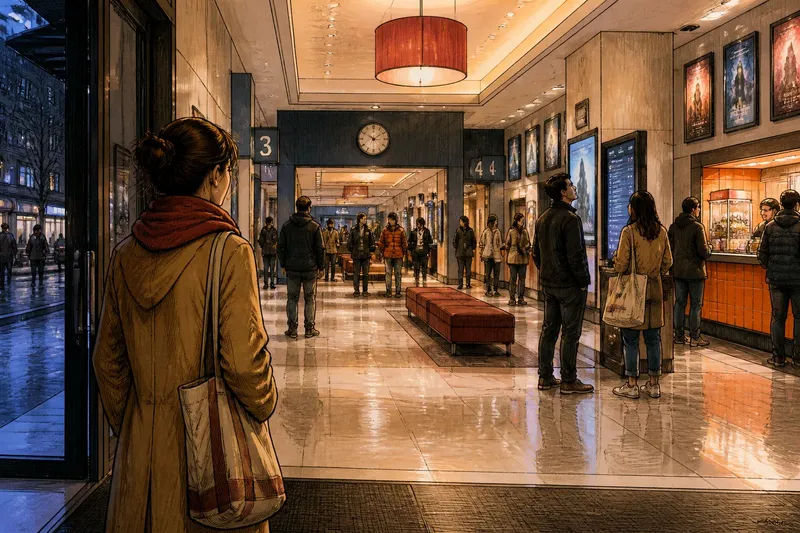
You reach the cinema with your coat half-buttoned, the ticket glowing on your phone and a message still waiting to be answered. The lobby before a movie is a small stretch of time, but how you use it can change the pace of the visit before the opening scene appears.
Rather than treating arrival as a hurdle between the street and your seat, notice it as a transition with its own sequence. These five simple habits make that in-between time easier to inhabit without turning it into another task list.
1. Let the entrance mark a pause
Crossing the doors often brings a quick change in sound, light and temperature. Give yourself a moment to register it before you check the screen for your auditorium or head straight to the concession stand. That brief pause helps separate the errands and conversations outside from the attention you are about to give the film.
There is no need to stand in anyone’s way or close your eyes in the middle of a busy foyer. Simply slow your walk near a clear spot, put your phone away if you can, and look toward the lobby rather than continuing to scroll. A threshold works a little like a doormat: it gives you a place to leave some of the outside behind, even if only temporarily.
2. Choose a useful waiting place
Waiting can feel longer when you keep shifting between the auditorium doors, the snack queue and the ticket display. Pick one convenient place that leaves room for other guests and lets you see the information you need. A bench, an open area beside the wall or a spot near the auditorium sign may be enough.
Use the pause for one concrete purpose: confirm the room, finish a short conversation, or decide whether you want a drink. Once that is settled, let the rest of the wait remain unscheduled. You do not need to fill every spare minute with another phone check or a search for something to do.
3. Keep small decisions small
Lobby choices can multiply quickly. You might be weighing a snack, a restroom stop, a last-minute message and whether to buy a printed ticket, all while the crowd begins moving toward the doors. Decide which choices matter to your comfort and which can be left alone.
Say you arrive with a reusable water bottle and a few minutes before the screening. You check the auditorium, refill the bottle if the cinema provides a suitable station, and then wait near the entrance instead of joining a queue for a snack you do not particularly want. The observable result is simple: when the doors open, you have fewer loose decisions to carry into the room.
4. Notice the room’s changing rhythm
A lobby is not static. The flow shifts as one audience leaves and another gathers, staff direct people toward different screens, and conversations rise or soften. Watching that movement can make the wait feel like part of a public occasion rather than dead time.
Notice practical details, not just the crowd: the sign that shows which auditorium is ready, the location of the accessible entrance, or where people are queuing without blocking the walkway. If you are meeting someone, agree on a clear landmark such as the poster case by the main doors, rather than sending repeated messages while both of you circle the space.
Keep your attention courteous. Avoid filming strangers or lingering in front of signs others need to read. The aim is to be present in the shared room, not to turn other moviegoers into scenery.
5. Carry less noise inside
The final stretch from lobby to seat is a useful point to finish what can be finished. Silence notifications, put away wrappers, and make any necessary restroom visit before the previews begin. These modest choices reduce the chances that you will need to interrupt your own attention or someone else’s once the screening is underway.
If a late message needs an answer, step aside and handle it before entering rather than composing a reply in the dark. If you are with friends, settle the practical questions outside: who is sitting where, whether anyone needs to leave early, and where you will meet afterward. Then let the room take over.
What should you notice?
How early should I arrive?
Choose enough time to reach your seat without rushing, based on the cinema, the screening and what you need to do before it starts. If you already have your ticket and need no other stop, a shorter lobby wait may suit you; a busy venue or a group may call for more breathing room.
Should I buy snacks before finding my seat?
That depends on the queue and your own preference. If the line is moving slowly, you can skip it or decide before arrival what you actually want, rather than making the choice under pressure.
What if the lobby is crowded?
Keep moving through narrow areas and wait near a wall or another place that does not block doors, signs or queues. If the space feels uncomfortable, go directly to the auditorium when it opens instead of trying to create a quiet corner.
How can I make arrival easier with friends?
Pick a meeting point that is easy to identify and send one clear message if plans change. Once everyone is together, agree on the next practical move so nobody has to keep searching the lobby for the group.
Take the transition with you
Try one change on your next visit rather than giving yourself a new set of rules: arrive with notifications already silenced, choose a calm waiting spot, or pause at the entrance before checking the screen. The lobby before a movie does not need to become an attraction of its own; it can simply give your attention time to catch up with your plans.
When you find your seat, take a moment to notice what has changed since you came in: the outdoor noise has receded, the room has gathered, and the next stretch of time belongs to the film. That shift is part of moviegoing, and noticing it can make the first image feel less like an interruption and more like an arrival.